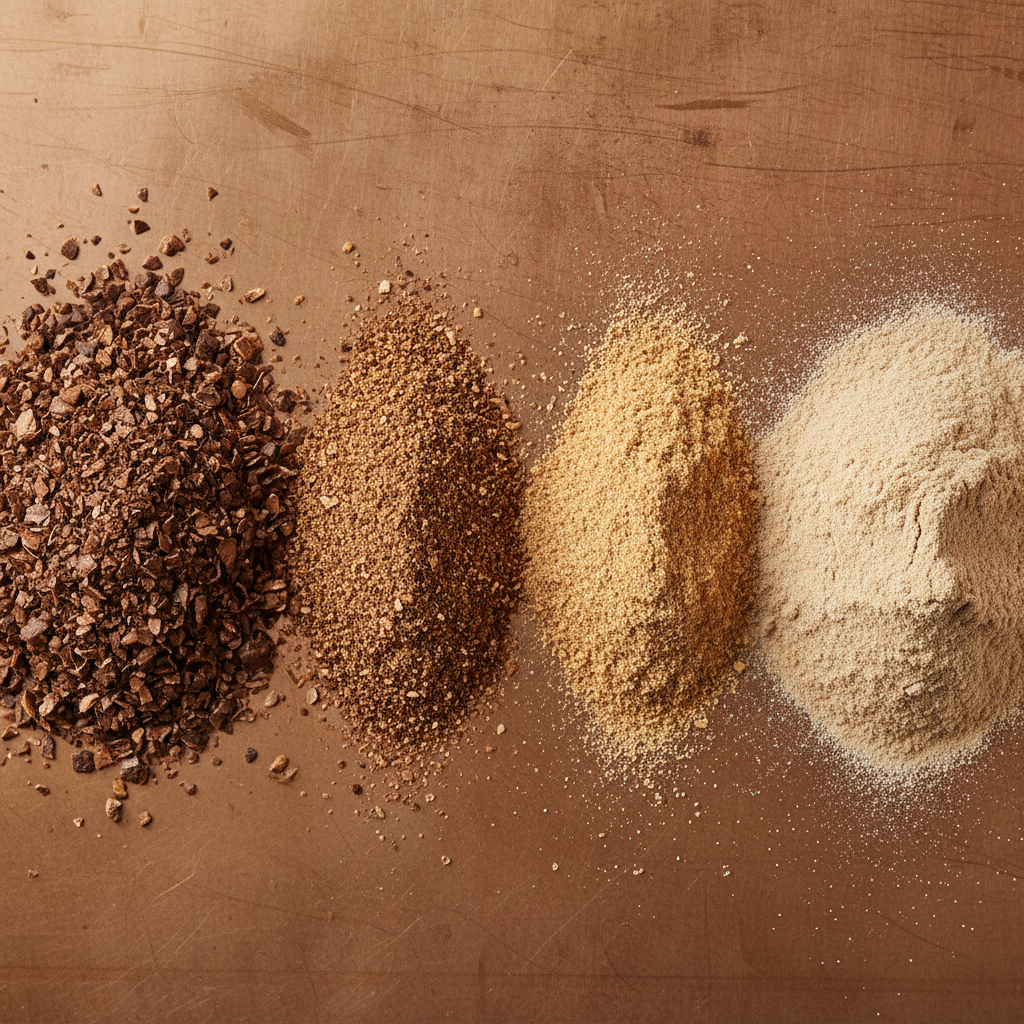
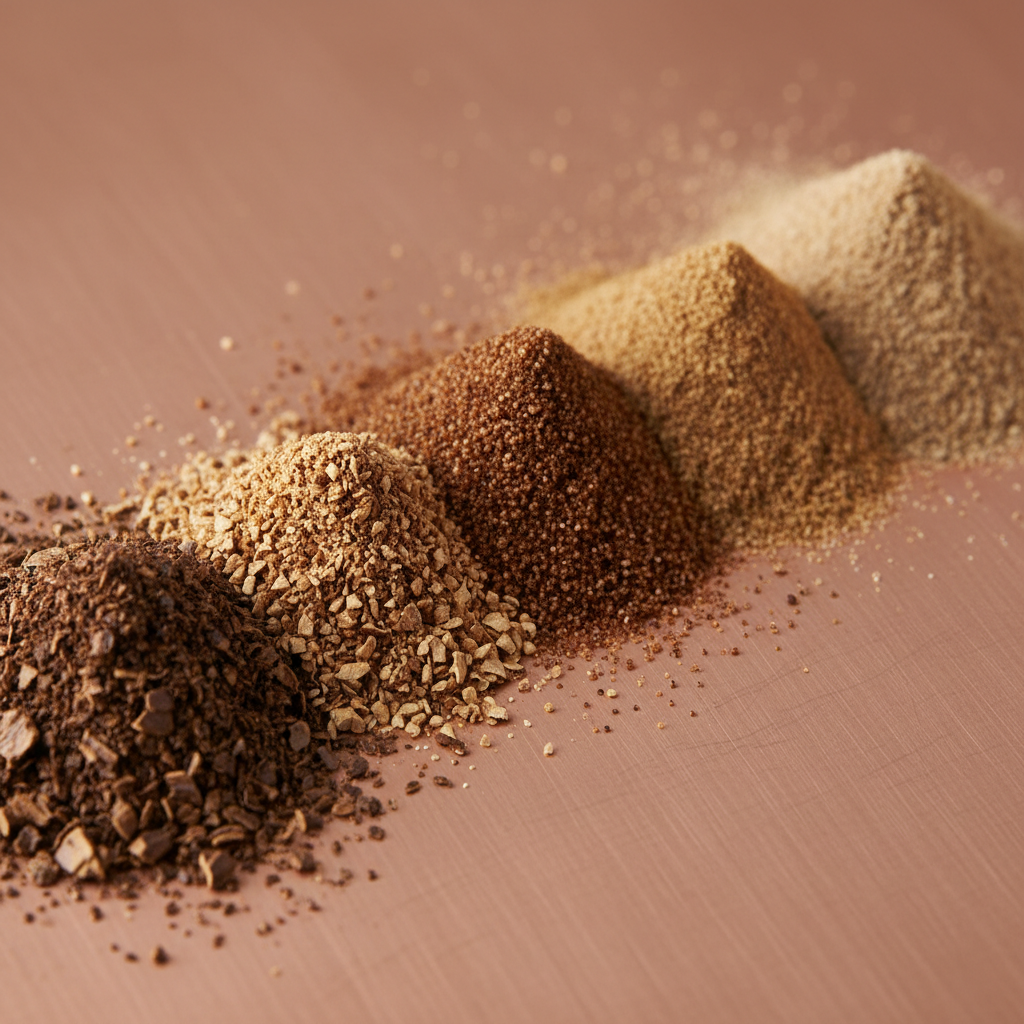
Graded walnut shell media in varying particle sizes, from coarse blasting grit to fine cosmetic powder

Precision Ground. Consistently Graded. Ready to Ship.

Walnut Shells for Every Grade, Grit, and Application

Precision-graded walnut shell media for cosmetics formulators, blasting and polishing shops, water filtration operators, and pet product manufacturers. Consistent particle size and hardness, lot to lot — screened to spec and shipped ready to run.

7
industry applications covered
4
grading tiers by mesh size
3
spec factors buyers check first
6
sourcing considerations

The first decision

Mesh size and grade

Almost every other spec question follows from this one. Walnut shell is crushed and screened into graduated mesh fractions, and the mesh size you choose determines whether the material cuts, polishes, or dissolves into a fine cosmetic powder.

Mesh rangeCharacterTypical use
4/8 – 8/12 meshCoarse, high cutHeavy paint and coating removal, mold cleaning, deflashing large parts
12/20 – 20/40 meshMedium, balanced cutGeneral blast cleaning, filtration media, moderate deburring
40/60 – 60/100 meshFine, gentle actionPrecision polishing, tumbling, light deburring, carrier for compounds
100 mesh and finerPowder, cosmetic gradeExfoliant powder, cosmetic formulations, fine fillers
Piles of graded walnut shell media ranging from coarse blasting grit to fine powder

Nominal mesh is a starting point, not a full spec

Two lots labeled the same mesh number can behave differently in a blast cabinet or a cosmetic batch if the screening tolerance is loose. Ask for the actual particle size distribution, not just the nominal grade, before you commit to a supplier.

Where it's used

Seven industries, one raw material

The same crushed shell, sorted into different mesh fractions, turns up in a cosmetics lab and a blasting cabinet for entirely different reasons. What connects the applications below is hardness, particle shape, and how tightly the material is graded.

The fine-mesh play

Cosmetics & Skincare

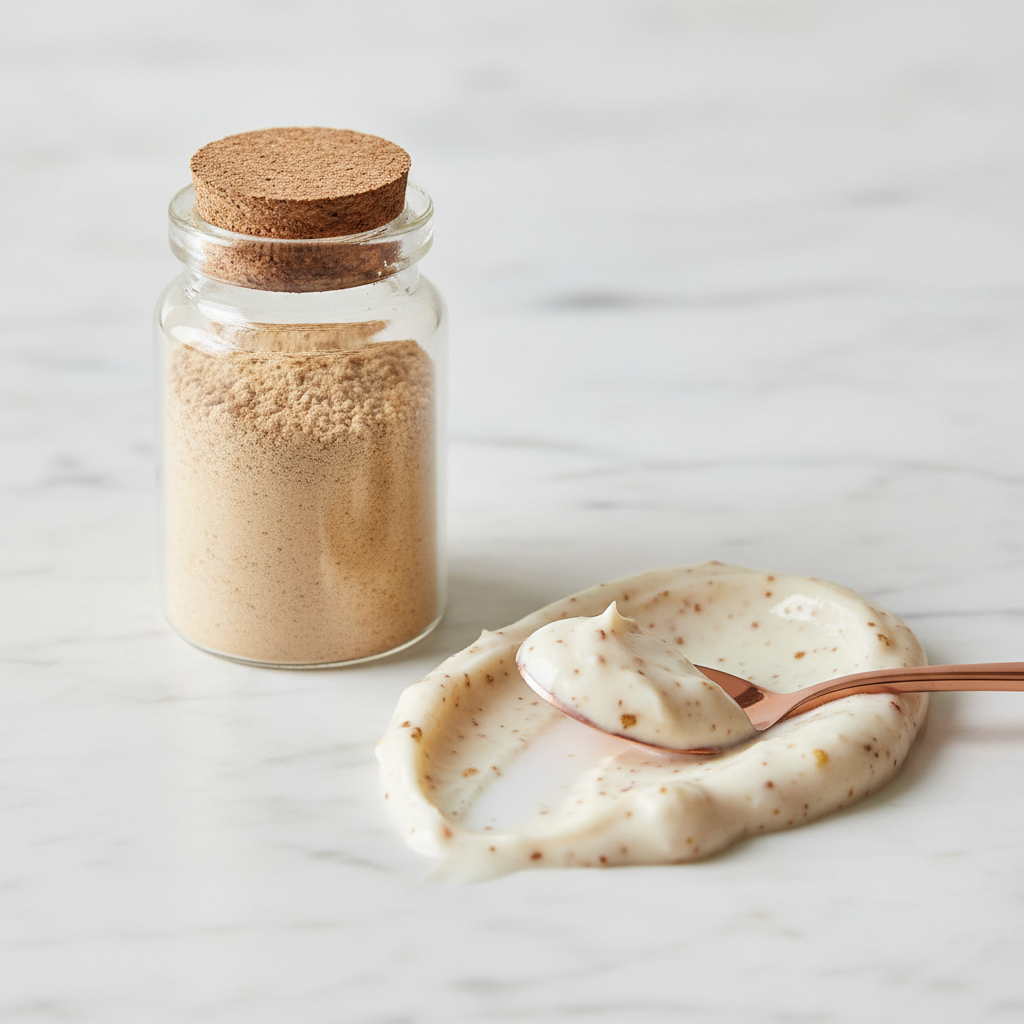
Ground to a fine, uniform powder, walnut shell is a natural exfoliant in facial scrubs, body polishes, and soap bars. Formulators like it because it is a plant-based alternative to microplastic beads and because particle roundness can be controlled to reduce skin abrasion at the finer mesh sizes.

Typical spec

80-mesh and finer, low-oil, tightly screened for consistent particle roundness

The classic use case

Blasting & Surface Prep

Coarser grades strip coatings, clean molds, and deflash parts without pitting the substrate underneath. Walnut shell sits below sand and steel grit on the Mohs scale, so it removes paint, rust, and carbon deposits while leaving softer base metals and composite surfaces intact.

Typical spec

8/12 through 20/40 mesh, angular particle shape for cutting action

The finishing step

Precision Polishing & Deburring

In tumbling and vibratory finishing, finer walnut shell grades polish metal parts, burnish jewelry, and clean small components without the aggressive cut of mineral media. It is also used dry, as a carrier for polishing compounds in mass-finishing barrels.

Typical spec

20/40 through 60-mesh, low dust, compatible with polishing compounds

The industrial media

Water & Oil Filtration

Granular walnut shell media is used in produced-water and process-water filtration to strip oil and suspended solids ahead of discharge or reinjection. Its oleophilic surface holds hydrocarbons well, and it backwashes clean for repeated filter cycles.

Typical spec

12/20 through 20/40 mesh, low fines content for stable bed packing

The bulk-volume use

Fillers & Extenders

As a lower-cost, lower-density filler, ground walnut shell extends resins, adhesives, and molding compounds where a mineral filler would add unwanted weight or hardness. It is also used as a carrier and anti-caking agent in agricultural and industrial formulations.

Typical spec

Fine to medium mesh, consistent bulk density for formulation dosing

The composite additive

Molded Plastics

Blended into thermoplastics and composite decking formulations, walnut shell flour adds a wood-like texture and reduces resin content per part. It compression-molds cleanly and takes color well, which is why it shows up in novelty and decorative molded goods.

Typical spec

Fine flour grades, low moisture for stable extrusion and molding

The consumer category

Pet Applications

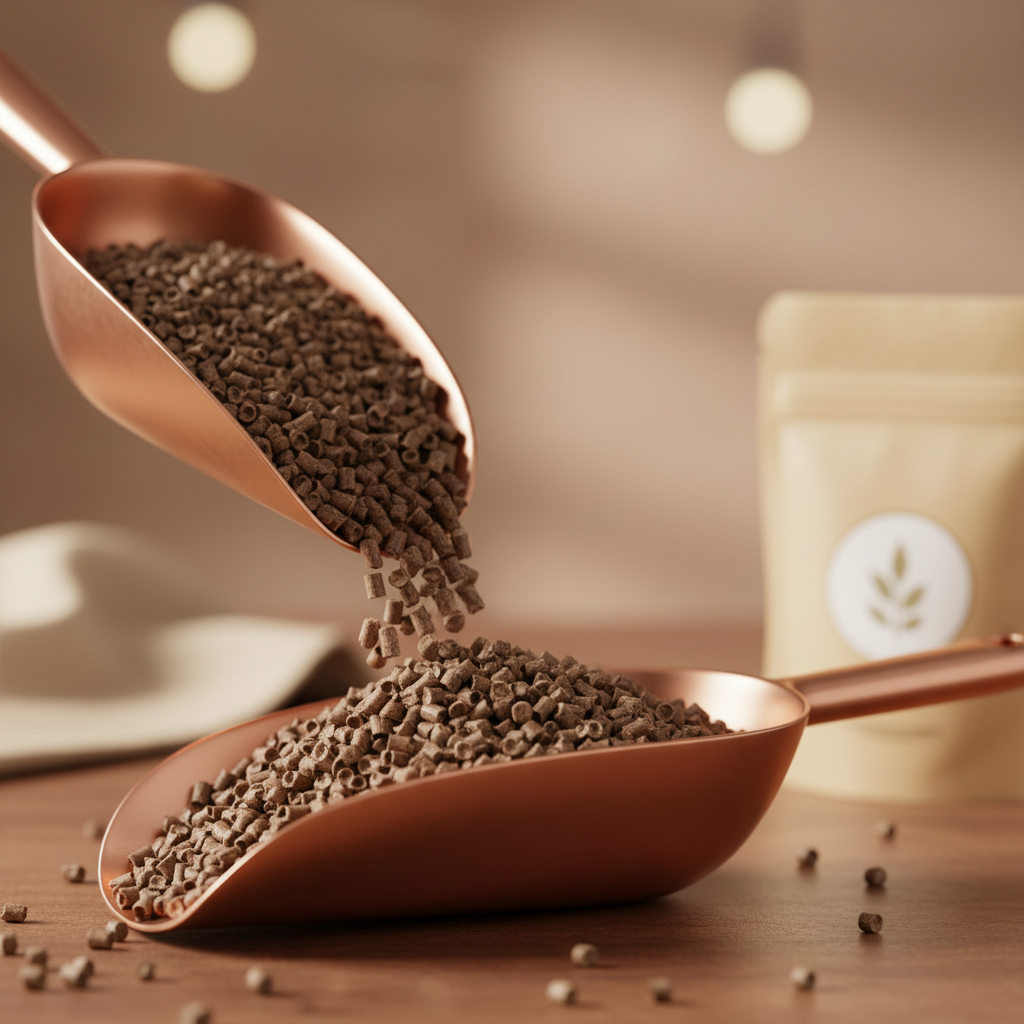
Pelletized and granular walnut shell is used as a clumping, biodegradable base in cat litter and small-animal bedding. It absorbs odor and moisture well and breaks down faster than clay-based alternatives, which is the selling point most pet brands lead with.

Typical spec

Coarse pellets or medium granules, low dust, consistent absorbency

Walnut shell blasting media being used in an industrial blast cabinet to strip a coated part
Fine walnut shell powder used as a natural exfoliant in cosmetic skincare formulations

Sizing the spec

Hardness, shape, and moisture

Three properties define how a lot of walnut shell will actually perform, and each one is worth asking a supplier to document rather than assuming from the mesh number alone.

01

Hardness sits between wood and mineral media

Walnut shell registers roughly 3 on the Mohs scale, harder than most plant-based media but well below sand, aluminum oxide, or steel grit. That middle position is exactly why it works as a cleaning and cutting media on softer substrates that mineral abrasives would damage.

  • Aggressive enough to strip coatings and carbon deposits
  • Gentle enough for aluminum, fiberglass, and soft alloys
  • Consistent hardness lot to lot is what a spec sheet should show
02

Particle shape drives the cutting action

Freshly crushed shell is angular, which is what gives coarse grades their aggressive cut in blasting. Screening and secondary processing round the edges down for finer grades used in polishing and cosmetics, where a rounder particle means less micro-abrasion on skin or on a finished part.

  • Angular particles for cutting, stripping, and deflashing
  • Rounded particles for polishing, tumbling, and cosmetic use
  • Ask for a particle shape description, not just a mesh number
03

Moisture and oil content are quality-control numbers

Raw shell absorbs moisture readily, and moisture content affects bulk density, flow through hoppers, and shelf life in a sealed formulation. Oil content matters more for filtration and cosmetic uses, where residual oil can affect bed performance or shelf stability of a finished product.

  • Request a moisture percentage on the certificate of analysis
  • Low, consistent oil content matters most for filtration media
  • Kiln-dried lots store and flow more predictably than air-dried

The detail buyers skip and then regret

Bulk density varies enough between lots to throw off a volumetric dosing system tuned to a prior shipment. If your process meters by volume rather than weight, ask for bulk density on every lot, not just the first sample.

Granular walnut shell filtration media used in an oil and water separation vessel

Supply chain

Sourcing walnut shell at volume

Walnut shell supply follows the walnut harvest and is concentrated among a small number of processors. Buyers who understand the supply chain get better pricing stability and fewer surprise lead times than buyers who shop on price alone.

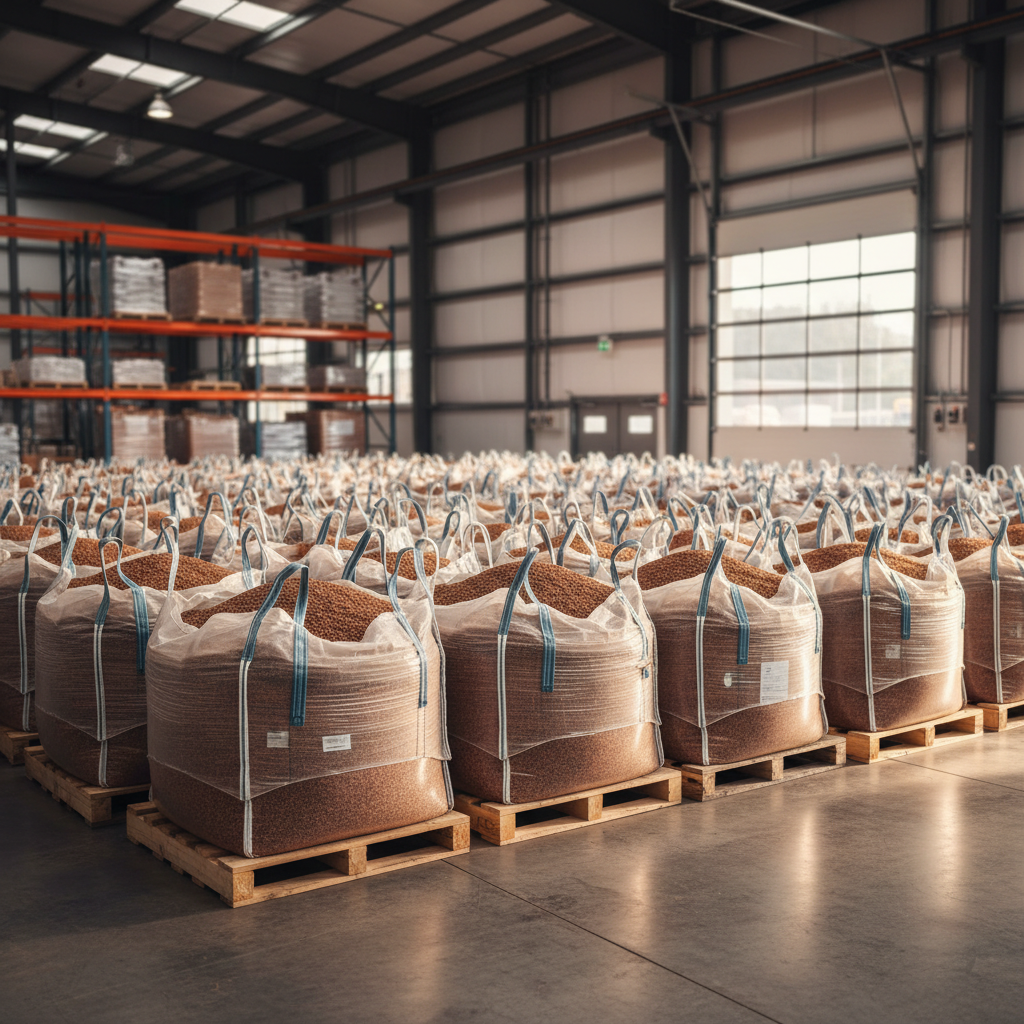
Bulk bags of walnut shell media staged for shipment at a processing and distribution yard
1

Domestic supply is concentrated, not scattered

Walnut shell processing is anchored to walnut-growing regions, so most volume moves through a small number of processors who buy shell as a byproduct from hullers and shellers. Ask any supplier where their raw shell actually comes from before you commit to a program.

2

Screening consistency separates suppliers more than price does

Two lots labeled the same mesh size can perform very differently in a blast cabinet or a filtration bed if the screening tolerance is loose. A tight particle size distribution, not just a nominal mesh number, is what keeps your process repeatable order to order.

3

Bulk packaging options affect landed cost

Super sacks, bulk totes, and rail or truck bulk delivery all price differently per pound once freight is included. High-volume filtration and blasting operations typically move to bulk delivery quickly; lower-volume cosmetic and specialty buyers usually stay on palletized bags.

4

Lead times track the harvest cycle

Fresh shell supply follows the annual walnut harvest, so processors build inventory to carry buyers through the rest of the year. Locking in a supply agreement or forecast ahead of the off-season protects your lead time when demand is highest.

5

Certificates of analysis should be a standing request

A COA covering mesh distribution, moisture, bulk density, and hardness is standard practice for filtration and cosmetic buyers and is worth requiring from any blasting or filler supplier too. It is the fastest way to catch a lot that drifted out of spec before it reaches your line.

6

Biodegradability is a genuine differentiator, not just marketing

For pet products, fillers, and cosmetic exfoliants competing against plastic microbeads or clay, walnut shell's natural breakdown is a real functional advantage worth stating plainly to end customers rather than treating as a footnote.

From shell to shipment

Quality control through processing

Consistency is the entire value proposition of a graded media. A supplier's quality process, not just their spec sheet, is what determines whether lot five behaves like lot one.

Incoming raw material inspection

Every inbound lot

Raw shell is checked for foreign material, moisture, and visible contamination before it enters processing. Lots outside tolerance get rejected or reworked rather than blended into good inventory.

Screening and grading

Per production run

Crushed shell passes through graduated screens to separate it into mesh-size fractions. Screen condition and throughput rate both affect how tight the resulting particle size distribution is, which is why screening equipment gets checked on a schedule, not just when output looks off.

Lot sampling and testing

Per finished lot

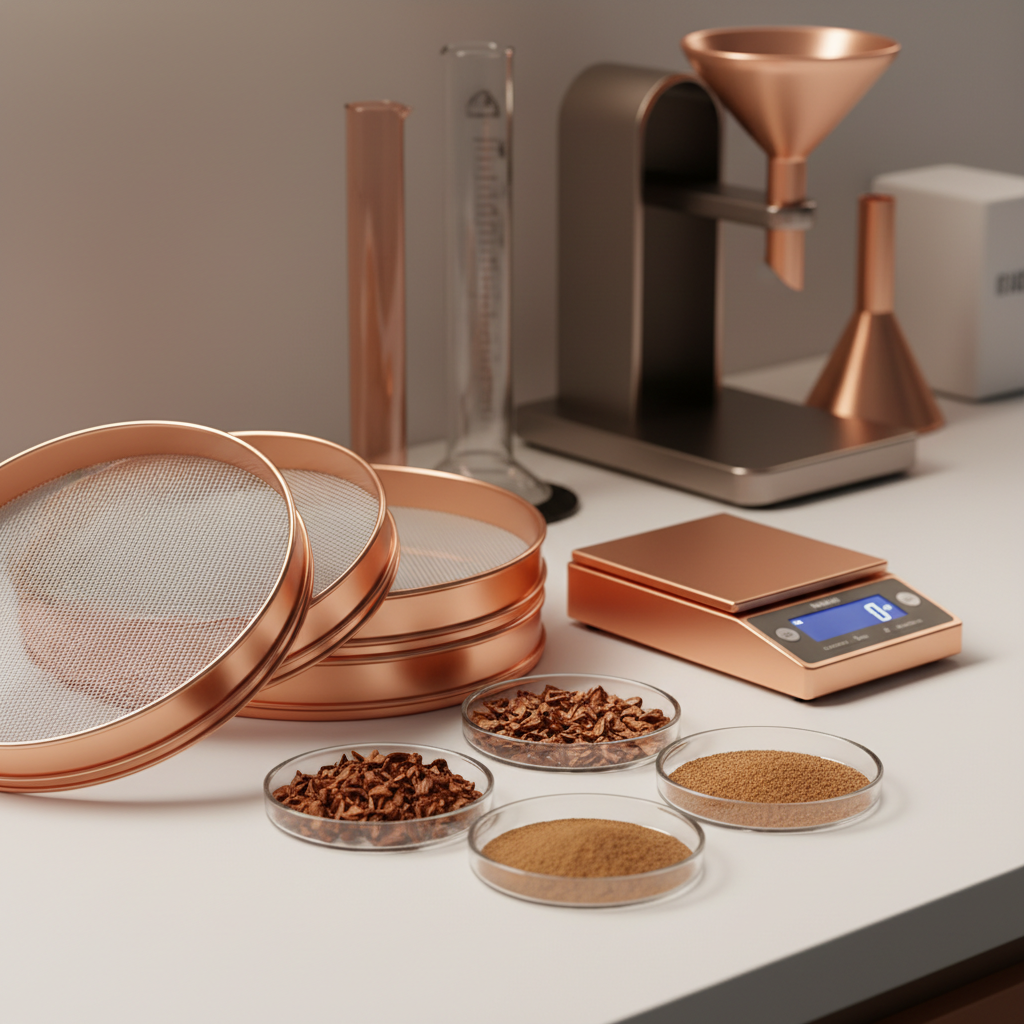
Finished lots are sampled for mesh distribution, bulk density, moisture, and hardness before release. This is the data that goes on a certificate of analysis, and it is what lets a buyer compare one supplier's lot against another on paper before running it.

Packaging and lot traceability

Ongoing

Bags, totes, and bulk loads are tagged back to a lot number so a quality issue can be traced to its source and isolated rather than triggering a blanket recall of unrelated inventory.

Lab technician testing walnut shell media samples for particle size and moisture content
Pelletized walnut shell used as a biodegradable base for pet litter and small-animal bedding

Consumer categories run on the same QC

Pet litter and bedding buyers care about the same lot consistency as an industrial blasting customer — absorbency and clump strength track directly back to particle size distribution and moisture control.

Questions

Walnut shell media FAQ

How hard is walnut shell compared to other blasting and polishing media?

Walnut shell sits around 3 on the Mohs hardness scale. That is harder than corn cob (roughly 2.5) but much softer than sand (around 6.5-7), aluminum oxide, or steel grit. In practice this means walnut shell cuts through coatings, carbon deposits, and rust while being gentle enough not to etch or pit aluminum, fiberglass, and other soft substrates that mineral media would damage.

What mesh size should I buy for my application?

Coarser grades in the 4/8 to 20/40 mesh range handle aggressive cleaning and stripping work. Medium grades around 20/40 to 60-mesh are the default for tumbling, deburring, and general polishing. Fine grades at 100-mesh and finer are used for cosmetic powders and fine fillers. Suppliers will usually run a sample against your part or formulation before you commit to a bulk order, and that trial is worth doing rather than guessing from a spec sheet alone.

Is walnut shell powder safe for cosmetic use?

Ground walnut shell is a long-standing cosmetic exfoliant, but particle shape matters more than most buyers expect. Coarse or poorly screened powder with sharp, angular edges can cause micro-tearing in skincare applications, which is why cosmetic-grade material is processed and screened specifically for particle roundness rather than sold off the same batch as blasting-grade material. Always request a cosmetic-grade specification, not just a fine mesh number.

How does walnut shell perform as a filtration media compared to sand or anthracite?

Walnut shell's surface has a natural affinity for oil, which makes it effective at stripping hydrocarbons from produced water and process water ahead of discharge or reinjection. It is lighter than sand or anthracite, backwashes more easily, and is commonly used specifically for oil removal rather than as a general-purpose filtration replacement for those media.

Why is walnut shell used in cat litter and pet bedding instead of clay?

Walnut shell is lighter to ship and handle than clay, clumps well when processed into the right particle size, absorbs odor effectively, and breaks down faster in the environment. Pet brands marketing a biodegradable or lower-dust alternative to clay litter lean on walnut shell specifically for those properties.

Does walnut shell have a shelf life, and how should it be stored?

Properly dried walnut shell stores well for extended periods if kept dry, since moisture pickup is the main degradation risk. It affects bulk density and can promote clumping or mold in humid storage conditions. Keep bags and totes off damp floors, and check moisture content on any lot that has been in storage for an extended period before using it in a moisture-sensitive application.

How does walnut shell compare to other organic media like corn cob or coconut shell?

Corn cob is softer and lighter, favored for very light-duty tumbling and some agricultural carrier uses where walnut shell would be too aggressive. Coconut shell is harder and denser than walnut, used where a more aggressive organic cut is needed without moving to a mineral media. Walnut shell sits in the middle of that range, which is a large part of why it covers the widest span of applications among organic media.

Get a Quote

Tell us the grade and volume you need

Send the application, the mesh size or grade you are working with (or your current supplier's spec if you are switching), and roughly how much you buy per order. We will come back with the grade that fits and a sample if you need one.

  • Spec matching

    Send a competitor spec sheet and we will match it against available grades.

  • Sample requests

    Trial quantities available before you commit to a bulk order.

  • Bulk and recurring supply

    Palletized, super sack, or bulk delivery for ongoing production volume.

Your details are used only to answer this inquiry. We do not sell or share them.